KDF and WHO Prepare Emergency Medical Team for Kenya’s El Niño Health Risks
With El Niño conditions and above-average rainfall forecast for October to December 2026, the Kenya Defence Forces (KDF) is strengthening its emergency medical response capacity to support communities and health facilities during potential disasters.
Flooding can severely disrupt healthcare services by cutting off access to medical facilities, contaminating water sources and forcing displaced families into crowded shelters where diseases such as cholera can spread rapidly. Kenya has already experienced significant impacts from flooding this year, with the March to May long rains affecting 27 counties. Landslides were also reported in Tharaka-Nithi, Elgeyo-Marakwet and Kiambu, while communities were cut off from essential services. By May, 122 deaths had been reported and more than 42,000 people had been affected.
The Kenya Meteorological Department has forecast El Niño conditions and above-average rainfall in several parts of the country. A national assessment identified 18 counties and 5,660 health facilities located in areas considered at risk, while overall flood preparedness was assessed at 54 per cent, highlighting both existing response mechanisms and remaining gaps.
The government has activated several preparedness measures, including an El Niño Contingency Plan. The Ministry of Health and the National Disaster Operations Centre have also begun joint planning meetings, while counties are being supported to assess and strengthen their own emergency preparedness.
As part of these efforts, the KDF has been developing an emergency medical team capable of deploying during disasters to provide treatment and help maintain essential health services. Thirty KDF health professionals completed induction training in 2024, and the team has since established a leadership structure and developed operational procedures.
Strengthening the Emergency Medical Team
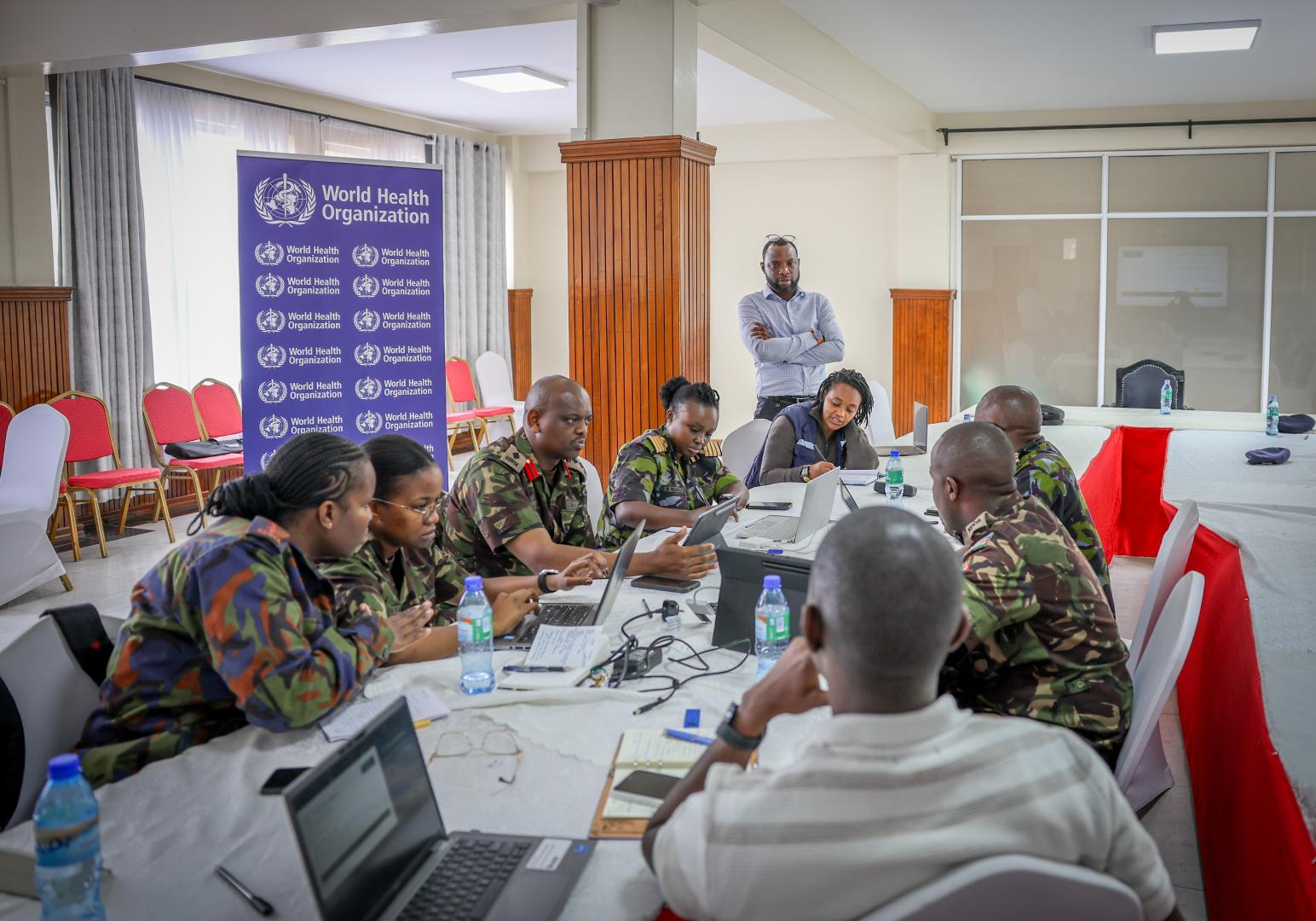
From 8 to 11 September 2026, KDF health security personnel worked with World Health Organization (WHO) experts to further strengthen the emergency medical team’s capabilities.
The programme established a core management team with defined leadership responsibilities, developed standard operating procedures covering clinical care, logistics, and water, sanitation and hygiene, and provided training to the team’s first 30 members.
Participants also reviewed a roadmap toward establishing a WHO-accredited Type 1 Fixed Emergency Medical Team. Such a facility would provide medical services to large numbers of patients from a fixed location during emergencies and could become a national resource for responding to major disasters.
Testing Kenya’s Emergency Response
The preparedness programme included a tabletop exercise designed to identify potential weaknesses before the anticipated rainy season.
Participants worked through a scenario involving heavy rainfall and flooding that displaced communities, followed by a cholera outbreak in temporary camps. The exercise examined how the emergency medical team would be activated, coordinate with national and county health authorities, mobilise resources and provide clinical, public health and sanitation services.
The exercise also examined how responsibilities would be transferred during the eventual handover and withdrawal of the emergency team. It helped identify procedures requiring further adjustment and clarified coordination arrangements within the KDF and with external partners.
“As KDF, it is expected of us to be called upon when our time comes. If the systems are overwhelmed, we can be an important national asset. We are not working alone. We are part of a team,” said Major General (Dr) Francis Kuria, Director of Medical Services and Chief of Clinical Support Services.
At the conclusion of the programme, participants developed an El Niño preparedness and response plan outlining potential scenarios and priority actions for responding to flooding and associated health emergencies.
Strengthening a Coordinated National Response
Large-scale emergencies require coordination across government agencies and health authorities. The exercise therefore focused on how the KDF emergency medical team would work alongside the Ministry of Health, county governments and other response organisations.
“Preparedness is about testing systems before they are needed. Exercises like this help us work through scenarios and address gaps before an emergency occurs. WHO will continue working with KDF and its partners ahead of the El Niño season and beyond,” said Dr Martins Livinus, Team Lead for Emergency Preparedness and Response at WHO Kenya.
The strengthened emergency medical capacity is intended to complement existing national and county health systems, helping Kenya respond more effectively if flooding and related health emergencies place additional pressure on healthcare services during the October-to-December rainy season.