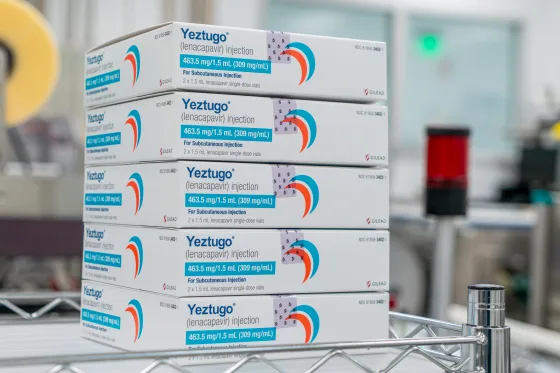
FDA Approves Groundbreaking HIV Prevention Injection
June 24, 2025 — In a monumental stride for public health, the U.S. Food and Drug Administration (FDA) has officially approved Yeztugo (lenacapavir) — a long-acting, twice-yearly injectable treatment for the prevention of HIV. Developed by Gilead Sciences, this breakthrough offers a revolutionary alternative to daily pills and could become a game-changer in the global effort to eliminate new HIV infections.
The approval comes after years of clinical trials and advocacy, earning lenacapavir the title of Science’s 2024 Breakthrough of the Year. With a single shot administered just once every six months, Yeztugo promises to improve medication adherence, reduce stigma, and expand access to prevention across high-risk populations globally.
What Is Yeztugo?
Yeztugo is the brand name for lenacapavir, a capsid inhibitor that prevents the HIV virus from replicating. It was previously approved under the name Sunlenca for the treatment of HIV in patients with drug-resistant strains. Its approval as a pre-exposure prophylaxis (PrEP) follows impressive clinical results from the PURPOSE 1 and PURPOSE 2 studies, which showed 99.9% effectiveness in preventing HIV infection.
Unlike traditional PrEP pills that must be taken daily — such as Truvada or Descovy — Yeztugo requires just two injections per year, administered subcutaneously (under the skin), offering both discretion and long-term protection.
Clinical Trial Success & Expert Endorsements
In clinical trials involving thousands of participants, Yeztugo recorded no new infections in individuals who received the injections on schedule. Medical experts have hailed it as a “landmark innovation” in HIV prevention.
“This is a game-changer. The convenience of two injections a year will significantly increase adherence and accessibility, especially among young people and vulnerable populations,” said Dr. Carlos del Rio, a global health expert at Emory University.
Dr. Monica Gandhi, an infectious disease specialist at UCSF, noted the shot’s potential to “eliminate many of the social and logistical barriers” associated with daily PrEP.
Global Access and Equity
Despite its promise, Yeztugo’s rollout raises pressing questions around affordability and access:
- U.S. retail price: Approximately $28,218 per year ($14,109 per dose).
- Insurance coverage: Most U.S. insurance plans and Medicaid are expected to cover it.
- Global access: Gilead has pledged to manufacture 10 million doses by 2026, offer royalty-free licenses in 120 low- and middle-income countries, and work with global health agencies to support distribution.
However, HIV/AIDS activists warn that middle-income countries could fall through the cracks of these pricing models. There are also fears that recent funding cuts to global programs like PEPFAR and USAID could hinder adoption in high-burden regions such as sub-Saharan Africa.
“This innovation is only meaningful if it reaches the communities that need it most,” said UNAIDS Director Winnie Byanyima.
Addressing Adherence and Stigma
One of Yeztugo’s greatest strengths lies in its simplicity. The biannual dose significantly reduces the burden of daily medication, a key reason why many high-risk individuals fail to adhere to existing PrEP regimens.
For communities where stigma around HIV remains prevalent — particularly among women, adolescents, and LGBTQ+ populations — the privacy and ease of a long-acting injectable may encourage greater uptake.
It also joins a growing arsenal of HIV prevention tools, including:
- Apretude (cabotegravir), a bimonthly injectable PrEP option approved in 2021.
- Dapivirine vaginal ring, endorsed by the World Health Organization.
- Traditional daily oral PrEP pills.
Challenges Ahead
While the science is promising, implementation remains a challenge:
- Cold-chain requirements and trained personnel are needed to administer injections.
- Public awareness campaigns will be critical to inform potential users.
- Cultural resistance and stigma could hinder uptake, especially in conservative regions.
Gilead is reportedly exploring future formats such as self-injectable or once-yearly alternatives, to further expand reach and flexibility.
The FDA’s approval of Yeztugo represents a pivotal moment in the global fight against HIV. With its exceptional efficacy, minimal dosing schedule, and potential to transform prevention for millions, it offers real hope for reversing decades of infection and stigma.
But that hope hinges on equitable distribution. As countries prepare for adoption, global health organizations, donors, and governments must act swiftly to ensure that this life-saving tool reaches the people who need it — no matter their income, geography, or background.
As the world races to end the HIV epidemic, Yeztugo may well be the shot that changes everything.