From Classrooms to Scholarships: UNHCR and TECNO Strengthen Refugee Education Pathways in Africa
One year after expanding their global partnership, UNHCR, the UN Refugee Agency, and TECNO are turning shared commitments into concrete education outcomes for refugee children and young people across Africa. Through sustained investment in both primary and higher education, the collaboration is helping improve access to safer learning environments, keep children in school, and build long-term pathways toward self-reliance.
Launched in 2025 as a three-year initiative, the partnership aims to support more than 54,000 refugee children through improved access to primary education, as well as 15 refugee scholars through the DAFI (Albert Einstein German Academic Refugee Initiative) scholarship programme. During its first year, the focus has been on translating these goals into practical support within refugee-hosting communities.
In 2025, the partnership recorded measurable progress in countries such as Ethiopia and Tanzania. Efforts contributed to the construction and rehabilitation of classrooms, as well as water, sanitation, and hygiene (WASH) facilities, creating safer and more conducive learning environments. More than 18,000 learners received essential materials, including textbooks and school kits, while targeted financial assistance helped vulnerable students enrol and remain in school.
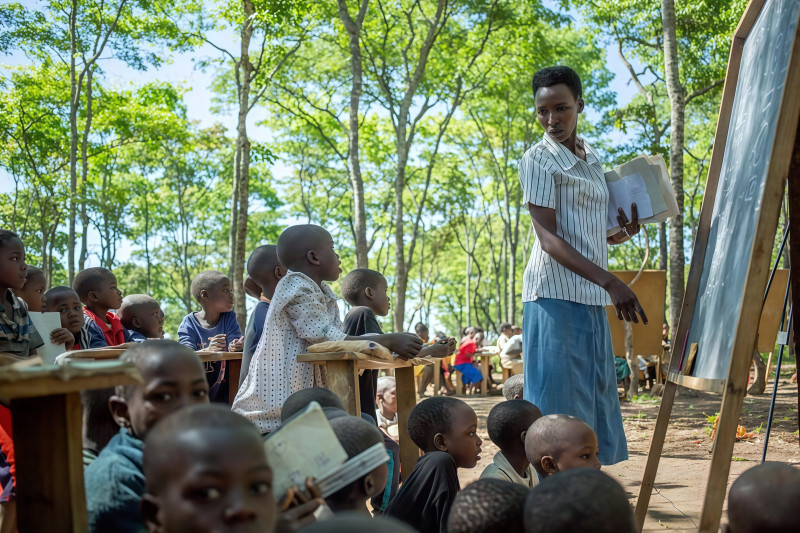
For many children, these improvements directly affect their ability to learn. Refugee student Irahoze in Tanzania described how lessons were previously disrupted when classes were held outdoors, but improved facilities now allow learning to continue even during harsh weather, making it easier for students to concentrate and stay engaged.
Beyond infrastructure, the partnership has also supported teacher training, school operations, and stronger engagement between parents and teachers. These interventions are helping improve both access to education and overall learning quality in resource-constrained environments.
The initiative spans the full education journey, from foundational learning to higher education. At the primary level, it focuses on strengthening school environments, supporting educators, and improving student retention. At the same time, continued investment in the DAFI scholarship programme enables refugee youth to pursue tertiary education and build skills for future employment and independence.
For students transitioning to higher levels of education, the opportunity comes with both hope and uncertainty. A refugee learner from Kenya, preparing to attend secondary school outside the Dadaab camp, described feeling both excited and nervous, expressing a strong desire to succeed and support their family.
Across East Africa, refugee education systems in countries such as Ethiopia, Kenya, and Tanzania continue to face structural challenges, including limited infrastructure, displacement pressures, and resource gaps. Within this context, the partnership aims to strengthen foundational learning systems and expand opportunities for children and young people to continue their education without interruption.
At the higher education level, the partnership also contributes to UNHCR’s global 15by30 target, which seeks to increase refugee enrolment in higher education to 15 percent by 2030. Since its launch, the DAFI programme has supported more than 27,200 refugee students across 59 countries, with increasing evidence of graduation and employment outcomes.